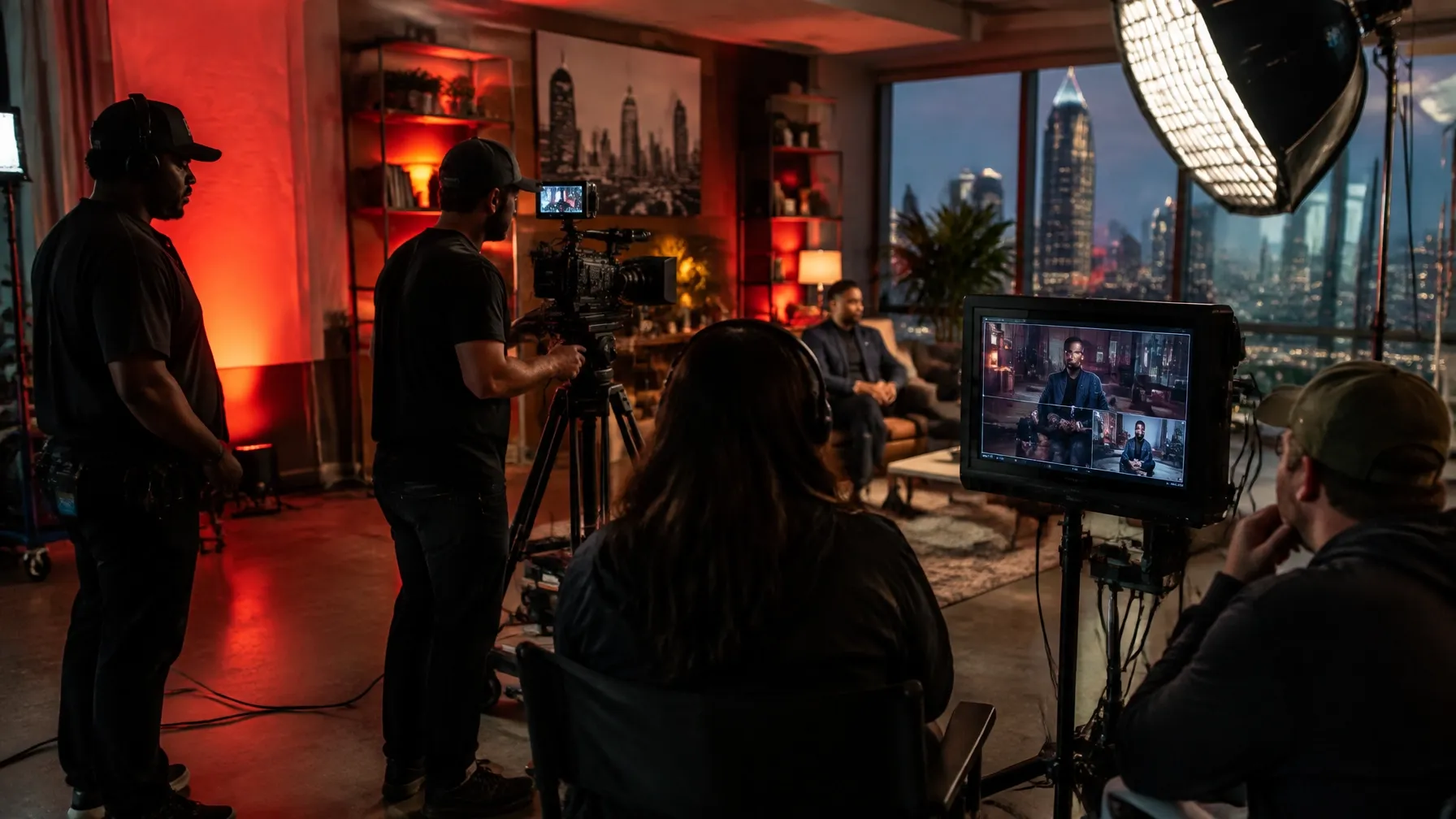
Choosing a production partner in Atlanta is a real decision, not a line item to fill at the last minute. Budgets are real, deadlines are real, and the wrong fit costs more than money: it can cost you a missed moment, a strained team and content that never does the work you needed it to do. Before you sign a proposal, use these ten questions to see whether a company can meet the moment and understand the market around it.
1. Local Market Knowledge
A partner who knows Atlanta's arts and entertainment scene understands the venues, the pace, the neighborhoods and how local audiences respond. Ask how long they have worked in the metro area and what kinds of Atlanta events and productions they have covered. Local knowledge often shows up in practical ways: knowing where a crew can load in, how a venue really flows and which details will make the final story feel true to the city.
2. Breadth of Services
If you need photography, video, live coverage and post-production, working with one full-service team keeps style consistent and logistics simple. Five vendors means five schedules, five invoices and five chances for the look to fall apart. Ask whether the same team can carry the project from planning through delivery, and make sure the proposed package covers the full path rather than only shoot day.
3. Technical Capability and Equipment
Ask what cameras, audio and lighting a company owns versus rents, and how it handles low-light ballrooms and outdoor stages. The answer tells you a lot before you sign anything. You are listening for a plan: reliable backups, clean audio, lighting that suits the space and operators who can adapt when a room, a schedule or the weather changes.
4. Experience With Live Events and Red Carpet Coverage
Live coverage cannot be re-shot. A crew that works red carpets and ribbon cuttings knows how to position, how to move and how to catch the moment the first time it happens without becoming part of the distraction. Ask how they manage arrivals, interviews, speeches and crowd movement, then look for evidence that they can stay composed when the room gets busy.
5. Post-Production and Editing Quality
The edit is where the story actually gets made. Ask to see finished pieces, not just reels, and ask about revisions and turnaround. A polished reel can hide the gaps between highlight moments; completed projects show whether a team can shape interviews, select the right details, balance sound and deliver a piece that holds together from beginning to end.
6. Content Strategy and SEO
Video that nobody finds is an expensive keepsake. A partner who thinks about where the content will live, how it will be titled and how it will be discovered keeps the work working long after shoot day. Ask what versions you will receive, which audiences each one serves and how the team can help your footage support search, social and your own site.
7. Professionalism and Communication
Look for clear timelines, one point of contact and straight answers. Production days run on communication, and so does the relationship. A professional team should confirm the brief, flag decisions that need your input and tell you quickly when a change affects scope, schedule or cost.
8. Scalability
Can the team handle a one-off shoot now and an ongoing monthly content rhythm later? A partner who grows with you saves you from re-vetting a new vendor every season. Ask how they staff different kinds of assignments, preserve your visual standards across a series and keep recurring work organized as the volume changes.
9. Proven Portfolio and References
Look for work in situations like yours — events, interviews, studios or whatever environment your project requires — and actually call one or two references. Ask whether the final work arrived on time, whether the crew was easy to work with and how the company handled an unexpected problem. Past performance in your category is the best predictor you have.
10. Transparent Pricing and Clear Scope
A real proposal names deliverables, revisions, usage rights and what happens if the schedule slips. It should also make clear which crew, equipment, travel and post-production costs are included. Vague pricing becomes expensive pricing, so ask questions while the scope is still easy to adjust rather than after production is underway.
Use this list as a scorecard in any conversation with a production partner, whether you are hiring in Atlanta or anywhere else. The right team will welcome specific questions because clarity at the start gives everyone a better shot at making work that matters.